|
At the 1948 Democratic National Convention, Hubert
Humphrey (1911 - 1978), the popular mayor of Minneapolis and a
Convention delegate, who had worked tirelessly to fight
discrimination against blacks and other minorities in Minnesota,
found himself discouraged by his party's weak support for civil
rights:
 My friends, to those
who say that we are rushing this issue of civil rights, I say to
them we are 172 years late! To those who say that this civil-rights
program is an infringement on states' rights, I say this: The time
has arrived in America for the Democratic Party to get out of the
shadow of states' rights and to walk forthrightly into the bright
sunshine of human rights! My friends, to those
who say that we are rushing this issue of civil rights, I say to
them we are 172 years late! To those who say that this civil-rights
program is an infringement on states' rights, I say this: The time
has arrived in America for the Democratic Party to get out of the
shadow of states' rights and to walk forthrightly into the bright
sunshine of human rights!
His passionate speech helped get President Truman's
civil rights proposals included into the party platform, and
propelled him toward his first term as a United States Senator.
Nicknamed The Happy Warrior for his energy, wit and
affable demeanor, Humphrey continued to his commitment to social
justice and human rights as a Senator.
Compassion is not
weakness, and concern for the unfortunate is not
socialism.
During his later term as Vice President, however,
Humphrey's loyalty to the policies of Lyndon Johnson alienated many
of his earlier followers, who had hoped he would have had more of
an impact in the administration, particularly as it related to the
Vietnam War.
Liberalism, above
all, means emancipation - emancipation from one's fears, his
inadequacies,
from prejudice, from discrimination, from poverty.
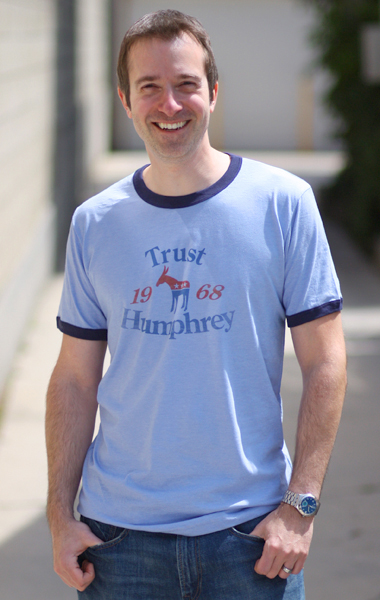
In his run for the presidency during the tumultuous
1968 campaign season, Humphrey was unable to shake his association
with the pro-war Johnson, or ignite a demoralized liberal base
grieving the recent losses of Robert Kennedy and Martin Luther
King, Jr., and lost the election to Richard Nixon.
It was once said that
the moral test of government is how that government treats those
who are in the dawn of life, the children; those who are in the
twilight of life, the elderly; and those who are in the shadows of
life, the sick, the needy and the handicapped.
Humphrey returned to Minnesota and, in 1971, the
Senate, where he served until his death in 1978.
Leadership in today's
world requires far more than a large stock of gunboats and a hard
fist at the conference table.
|